Jump to Navigation

Chicagoland Personal Injury Attorney Blog

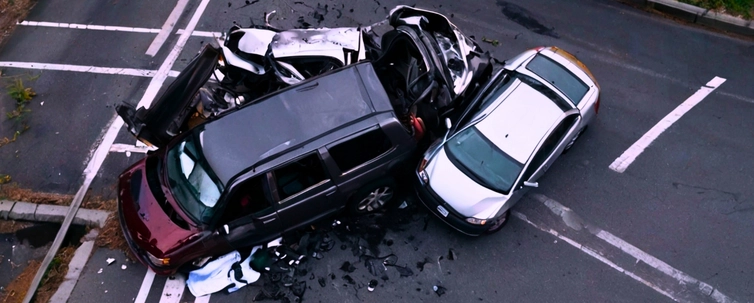
Van crashes into CTA bus on Chicago's West Side

  • 02
  • May
    2012

It was seemingly normal Saturday afternoon for two Chicago women driving home after spending the morning shopping for a baby shower. Their afternoon quickly turned chaotic, however, when a blue van came out of nowhere and ran into a Chicago Transit Authority bus stopped in the traffic lane next to them. The impact had so much force that the van spun and ran into them, causing damage to the car.

The women were not seriously hurt, but 14 other people were hospitalized in the Chicago area as a result of the bus accident. Two of these people, including the driver of the van that caused the accident, were admitted to Mt. Sinai Hospital in serious-to-critical condition, a Chicago Fire Department spokesman said. An additional 12 injured bus passengers were admitted to various hospitals in good-to-serious condition, according to Examiner.com.

Frightening Facts on Distracted Driving and Teen-Agers

  • 30
  • April
    2012

Grazian and Volpe has been advocating for the victims of distracted driving in Chicago and South Chicago for over 27 years. We have noted the marked annual increase in the incidents of motor vehicle fatalities and serious personal injury caused by car accidents in which the driver has been distracted whether through cell phone use, eating or drinking while driving, texting, adjusting the radio or grooming or putting on make-up while driving. Recent studies have shown that the vast majority of all drivers recognize that driving while distracted is dangerous and are not surprised when told that distracted driving is responsible for more than 5,000 deaths due to motor vehicle accidents and close to 450,000 motor vehicle accidents involving personal injuries.

The uptrend in car accidents due to distracted driving is in direct correlation with rapid rate with which phone applications and technology are expanding.

In June of 2011, 196,000 million text messages were sent and received in the USA which represented a 50% increase over the previous year. A Virginia Tech study of the same year found that a driver is 23 times more likely to crash if driving while texting; and a serious or fatal accident is four times more likely to occur.  

Despite these frightening statistics, an on-line survey of 2000 teens between 16 and 19 years found that 86% had driven while distracted even though 84% know that it dangerous and 89% recognize that the behavior reduces reaction time.(2010 AAA and Seventeen Magazine: Ad Council, 2011)

To make matters horrifying- 77% of young adults surveyed stated that they are very confident that they can safely text while driving despite their knowledge of its dangers! (Ad Council, 2011)

Important Info in the War VS Distracted Driving Car Accidents

  • 27
  • April
    2012

Car accidents caused by the distracted driver have been a sad and constant source of client advocacy for the Chicago Accident Lawyers at Grazian and Volpe. In our thirty years of practice we have witnessed the rapid annual escalation of car accidents and injuries and fatalities due to cellphone use and other forms of distracted driving.

We would like to help end this trend and are advising our viewing public at WCIU, You and Me in the Morning and all are clients, friends and family that April is National Distracted Driving Awareness Month, a month dedicated to making the public aware of the dangers of distracted driving. Parents trying to educate themselves and their children as to the dangers of distracted driving can visit several webites dedicated to this issue. endDD.org is a non-profit organization founded by a father after his daughter was killed as a pedestrian by a distracted driver and, NODD.org whose goal is to raise the awareness of teen distracted driving. Each organization gives presentations to teens across the country.  Readers can visit 60forsafety.org to see request a presentation for your school or organization or to find where or when one is being given in your area.

The Chicago Accident Lawyers at Grazian and Volpe would like to see an end to the tragic and unnecessary consequences of distracted driving and know that prevention starts with education. Please visit our blogsite at myaccidentlaw.com or watch John Grazian on WCIU, You and Me in the Morning for more information and tips on how you can help in this fight.

How to Make Sure Your Biker Client Gets a Fair Shake

  • 02
  • April
    2012

The Chicago Accident Lawyers at Grazian and Volpe have advocated on the behalf of the victims of motorcycle accidents for over 25 years. The challenge for any personal injury attorney practicing in this area is to deal with the misperceptions the non-riding public has of motorcycle riders.

Court surveys indicate that the jury verdicts in favor of the victims of motorcycle accidents come in 25% lower than those of a similiar accident involving the drivers of motor vehicles. While many may argue the percentages, the bottom line is that juries treat those who ride motorcycles differently and motorcycle riders need to be cognizant of this when interviewing accident lawyers to handle their claims. Lawyers practicing in the area of motorcycle accidents need to be aware of and prepared to handle the inherent bias against riders.

Jury focus groups assembled to review motorcycle accidents reveal that the non-riding public perceives riders as motorists who range from risk takers to just plain reckless. While clearly not a true perception of the riding public, a personal injury attorney representing a rider must be prepared to dispel these perceptions.

It is important to differentiate the client from these perceptions and to identify him as a "regular Joe or Josephine." Evidence of the client's education, family, employment, worship habits and community involvement must be acquired and developed as a priority to counter the defense's anticipated exploitation of the general negative public perception.

As Chicago and South Chicago Motor Vehicle Accident lawyers of over 25 years, we are continually surprised of the insistence of these negative perceptions in light of the growing number of people 50 and over who begin riding as a cost effective way of enjoying free time through economical travel.

Insurance companies are aware of the challenges faced by the defenders of these claims and often refuse just settlement based on a riders chances at trial.

We recently reached a large settlement with a not-so-good insurance company that refused to deal until we were able to establish that our client was a nurse, with two children in college and a long standing commitment to charity and community service. 

As we wrote in our blog at myaccidentlaw.com on March 28th, a GPS system can be crucial where a client has suffered memory loss and/or a driver is insisting that the rider is at fault.  This coupled with positive evidence of responsible character may be the key factors in assuring that your client is not one of the riders who does not receive the settlement they deserve.

A GPS Can Help Even the Accident Odds Between Biker and Driver

  • 28
  • March
    2012

Now that outdoor weather is upon us, the Chicago and South Chicago Personal Injury Lawyers at Grazian and Volpe wish to re-visit the safety of bikers, motorized or pedal driven. We have advocated on the behalf of hundreds of victims of motor vehicle accidents for over 25 years. It is an obvious fact that motorcyclists and bicyclists suffer worse injuries. Perhaps the scariest and most consistent feature of these accidents are the brain injuries and memory loss suffered by the bike rider. Often, the cyclist suffers a loss of memory rendering them unable to recount the reasons and events of the accident.

As Chicago and South Chicago Accident Lawyers, we often have the unsavory task of reconstructing much of the accident through patterns of damage on the helmet, gear or the break and wound pathology of the victim. Hopefully, photos were taken of the motor vehicles and tire skid patterns. Often the driver of the motor vehicle involved in the accident has an advantage in recounting the details of the accident and not surprisingly-in the light most favorable to themselves meaning the very real possibility that a biker does not receive the settlement to which they may be entitled.

ENTER THE GPS! Recent litigation in the area of motorcycle and bicycle accidents have utilized the information provided by GPS systems employed by bikers to re-construct the true course of the accident. While the GPS systems may be utilized by all sides in a motor vehicle/bike accident, the use of these systems is certainly altering the way both car and bike accidents claims are settled. The Chicago Accident Lawyers at Grazian and Volpe know that the advocacy of claims require the collection and analysis of GPS data, whether from motor vehicle driver or the cyclist. This data is crucial in reconstructing the accident as well as jogging the cyclist's memory and facilitating their ability to piece together the details of the accident.  Data recorded may provide the speed, direction, stop pattern, road obstructions and time of impact. It can serve to corroborate, refute or clarify the driver's account of the accident.

It is an unfortunated fact that motorcyclists and bicyclists suffer the worst in any accident involving a motor vehicle. Obtaining maximum settlement for these victims is often hampered by the memory loss often suffered by them due to their greater propensity to head injury.

As experienced Chicago Accident Attorneys we now recommend that our cyclist clients consider traveling with a GPS system as another safety tool. While helmets, lights and proper safety practices may protect a client, a GPS may assure that they obtain maximum compensation for their injuries.

Please follow Grazian and Volpe the first Tuesday and Thursday of every month on WCIU, You and Me in the Morning where John Grazian discusses issues of public safety and advocacy in a series of engaging formats. These shows are broadcast on You Tube and on our website at myaccidentlaw.com

New Hospital Study Important for Elder Care

  • 14
  • March
    2012

The Chicago and South Chicago Nursing Home Attorneys at Grazian and Volpe are advising their clients who are nursing home patients and their families to read the report issued by the country's leading hospital accreditation board, the Joint Committee at www.jointcommission.org.  The Joint Commission released a report detailing the 405 medical centers that have been the most diligent in following protocols to treat conditions like heart attacks and pneumonia. Almost without exception, the most highly regarded hospitals in the United States did not make the list. The list did not include a single hospital in Chicago!

The report found that hospital performance nationwide continued to improve steadily in 2010 on a variety of measures and is not at high levels. The report assessed mor than 12 million treatment actions, like whether heart attack patients are given aspiring upon admission and surgical patients receive antibiotices with an hour. The commission found that hospitals followed standards 97 percent of the time which is up from 82 percent in 2002.

The commission noted that reputation and performance on important measures of quality do not always correlate and found that the list of top performers included a disproportionate share of small and rural hospitals as well as 20 Veterans Affairs medical centers.

Hospital officials did point out that the number of well-known medical centers did not miss the 95 percent threshold by much and that a small number of patients may have made a statistical difference. They also added that the volume of cases a busy hospitals makes complete compliance more difficult and that teaching hospitals may not follow standard procedures because they are ahead of the curve and using new therapies which have not entered the main stream.

The Nursing Home and Elder lawyers at Grazian ande Volpe advise their clients and all elder patients and thier famillies to utilize this report to familiarize themselves with standards of care and procedures required in hospitals so that they may monitor and insist upon the best care possible. In addition, they can visit the federal government's Hospital Compare site which includes outcome measurements like mortality and readmission rates.

In our many years of advocating for elder patients and their families, Grazian and Volpe has found patient knowledge to be the best defense against nursing home abuse and negligence. We advise every client to stay well and safe but if they can't- they need to stay with Grazian and Volpe, Chicago and South Chicago Nursing Home Lawyers for over 25 years.

The Elderly and Brain Injury: Another Nursing Home Hazard

  • 13
  • March
    2012

The Chicago and South Chicago Nursing Home Lawyers at Grazian and Volpe have advocated on behalf of the elderly for over 25 years. It is unfortunate that many illnesses and injuries to the elderly are unavoidable and the causes often ignored due to the advanced age of the patients. We are happy to report that the medical community is recognizing that certain neural conditions are not always inevitable and may be prevented and/or treated.

Hospital delirium may not be caused by medical neglect but if a nursing home or hospital ignores the warning signs at the onset of the condition, serious and permanent brain injury could occur. One of the most common, dangerous, costly and least understand complications of hospital stays for the elderly is known as "hospital delirium."  This type of delirium results in large part from the actions of medical workers, according to Dr. E. Wesley Ely, a professor of medicine and critical care at Vanderbilt University School of Medicine. "Even well-meaning doctors are doing damage withour knowing it," he said.

A host of medication can upset brain function and trigger delirium by interfering with the neurotransmitters that communicate between nerve cells. The long list includes sedatives, sleeping pills, narcotic painkillers and some allergy, blood pressure and incontinence drugs. Immobilizing and immobilized patients can exacerbate the risk.

Each year 20 percent of the 11.8 million nursing home in hospitals and nursing care develop delirium, including 60 percent to 85 precent of those in intensive care on ventilation and more than half of postoperative surgical patients. Even though this condition is common, hospital delirium is not being identified or treated effectively as possible. "This dysfunction is grossly under-recognized," according to Dr. Ely.

While the delirium may disappear by the time the patient leaves the hospital, debilitating brain injury may manifest in the form of severe cognitive problems, resulting in long-term memory and mental impairment.

Dr. Sharon K. Inouye, a professor of medicine at Harvard Medical School and director of the Aging Brain Center at Hebrew SeniorLife in Boston states that, "Medical Schools are now training the new generation abour deliriums's dangers, buts..thousands of doctors in the older generation ..don't know how to recognize (derlirium) or know it (may) be preventable."

Delirium and dementia are two different conditions and families, caregivers and the medical profession often confuse the two. Delirium signals that something in the body is seriously wrong and needs attention...immediatley. Dementia is a chronic confusion and memory loss that comes on gradually and gets worse. Delirium is a confusion that comes on suddenly and is brought on by triggers such as infection, the stress of disease or an operation, not getting enoug food or water, sleep or the cocktail of medications given by the hospital or nursing home facility.

Your Chicago and South Chicago Nursing Home Neglect Attorneys at Grazian and Volpe want all our elderly clients, family and caregivers to look for any of these four signs:

-Acute change of mental status: Not making sense when he or she talks? Disoriented, illogical, or unable to focus. Trust your instincts and insist that the staff know and understand that this is not normal behavior

-Inattention: As you hold the patients' hand, ask him or her to squeeze every time you say the letter "A", as you spell out "save a heart." If they miss or squeeze the wrong letter, that is a sign of delirium.

-Altered lever of consciousness: You're looking for two possible extremes. In hyperactive delirium, patients are anxious, agitated, and aggressive. In hypoactive delirium, they will be sleepy and not making eye contact.

-Confusion and disorganized thinking: Can the patient track a conversation? Ask simple questions like, "does one pound weigh more than two pounds?", or "Will a stone sink or float in water."

Be insistent and persistent if you sense something is not right with your elderly loved one. This condition may be stopped and long term brain injury avoided.

It is always better to stay safe but if you can't stay safe-say with Grazian and Volpe, your Chicago and South Chicago Elder Advocates and Personal Injury Lawyers for over 25 years. Please follow us at myaccidentlaw.com/blog or on WCIU, You and Me in the Morning on the first Tuesday of every month where we try to answer questions and educate the public on how to avoid injury and advocate for their rights.

Nursing Home Neglect: The Care Plan and Bed Sores: Part III

  • 12
  • March
    2012

The Chicago and South Chicago Nursing Home Lawyers at Grazian and Volpe have advocated on behalf of the elderly for over 25 years. In that time we have found that pressure sores are often preventable and the cause of serious illness and complications resulting in the wrongful death of the elder resident.

Nursing Home Neglect and Bed Sores are a related and tragic combination.  In many instances, pressure ulcers are avoidable. Previous articles on the myaccidentlaw. com blogsite have discussed applicable law and the admittance process and records for the determination of the pre-existence of pressure ulcers when an elder patient first enters the nursing care facility.  In all cases, the only true defense that may be asserted by the facility is that the resident's condition made the development or worsening of the ulcer clinically unavoidable. Once the admitting assessment is completed and a proper care plain instituted, the issue for advocates for victims is to demonstrate either a) the care plan was deficient and/or 2) it was administered incorrectly or negligently.

Skilled Nurses and aides rely on the care plan to determine the level and type of care to be administered to an elder patient.  When dealing with victims of pressure ulcers, personal injury attorneys need to examine the care plan for interventions like special mattresses, turning and repositioning schedules, medications, nutrition, and dressings.

To ascertain whether the treatment and precautions were implemented, elder care lawyers must examine 1) Physicians orders specific for treatment and medications 2) Medical administration orders (MAR) which indicate the medications and time of administration. These are kept on a cardex located on the medical cart and initialed by the nurse and 3) Treatment administration records (TAR) which show the date and time the treatment from the physician's orders where provided (also recorded on the cardex). All documents need be compared to make sure they are consistent and in compliance. Nursing notes known as "interdisciplinary progress notes" should also be obtained and reviewed.

The "minimum date set" (MDS) must be completed by staff and file by computer with the Centers for Medicare and Medicaid Services (CMS) to obtain payment. It indicates various assessments and observations of the resident, including pressure ulcers, cognitive abilities, mobility and diagnosis including falls and progression.  This is a snapshot of the patient filed with the government and should be compared to the other facility documents to determine discrepancies. 

Finally, the "activities of daily living" (ADL) is completed by the certified aides. It is sometimes known as the certified aides flow sheet. This record addresses feeding, bathing, changing of incontinent residents, dressing and turning and repositioning. Since these are routinely destroyed, it is important the nursing care lawyers question all witnesses as to how these flow sheets were utilized and the content therein.

Together as a whole, the nursing chart and supporting records tell the story of the conditions the resident is suffering from as well as the care received. All must be analyzed to determine whether the pressure sores were avoidable.

Please do not hesitate to call the Chicago and South Chicago Nursing Home Lawyers at Grazian and Volpe if you suspect elder abuse of neglect. This call may be the key to preventing serious injury or illness.


Nursing Home Neglect: New Rulings Leave No Room for Delay in Filing Complaints

  • 09
  • March
    2012

The Chicago and South Chicago Nursing Home Lawyers at Grazian and Volpe want families and loved ones to know that a recent ruling leaves no room for delay in filing complaints against nursing homes. There are few tragedies more compelling and heart wrenching then to have someone you love suffer abuse or neglect while in the care of a nursing home. The children and friends of these elder victims feel helpless and are often ignored or put off when bringing their concerns to the management or employees of the nursing home.

Due to a recent ruling of the Illinois Supreme Court it is now more important than ever that nursing home victims and their loved ones contact their Chicago Nursing Home Lawyer as soon as they become aware of any neglect or abuse. The Court  recently ruled that punitive damage claims for the neglect or abuse of a nursing home resident will not survive the death of the resident. We at Grazian and Volpe are very distressed by this ruling as it means that negligent nursing care facilities have less incentive to prevent and remedy the abuse and neglect as they will not be compelled to pay punitive damages should the elderly person not survive the cause of action.  It has been a general rule in Illinois that the right to seek punitive damages does not survive the death of the injured party because judicial logic held that the deceased victim could no longer be appeased by the award of compensation. However, as it regards the elderly victimized by neglect and abuse in a nursing home, it seemed only just that punitive damages should survive the victim as their death is more likely during the course of a lawsuit due to their advance age and infirmity AND the threat of punitive damages would carry a strong deterrent effect to nursing homes engaged in neglectful and abusive practices.

However, the recent verdict in Vincent vs Alden-Park Strathmore, Inc. No. 110406, 2011 WL 1077707 (Ill Sup Ct) has held that no punitive damages are allowed where the victim is deceased even though they were found to be the victim of nursing home neglect.  This means an elder victim, family or friends should not delay in contacting their South Chicago Injury Lawyer where they suspect abuse or injury in the nursing home. This not only prevents future personal injury or neglect but also serves to assure that the nursing home system is encouraged to stay safe and vigilant on behalf of all elder residents.

For further information or to have your questions answered please contact Grazian and Volpe or visit us on FaceBook or YouTube for more important information to safeguarding your rights. John Grazian is also appears on WCIU, You and Me in the Morning on the first Tuesday of every month. Please feel free to contact the station and ask any legal questions that you may have. Remember, knowledge is your best defense and there is never any charge for a consultation!

Nursing Home Neglect: Are Pressure Sores Avoidable? Part II

  • 08
  • March
    2012

The Chicago and South Chicago Nursing Home and Injury Lawyers at Grazian and Volpe are concerned about the state of elder care in our state and nationally. As Elder Advocates for over 25 years we have seen tragic and often preventable injuries and death and know that knowledge and education can often be the best defense against the abuse and neglect of our elderly.

Nursing Home Neglect and Abuse is a sad and tragic fact of life.  The advocacy for the victims of this type of neglect and abuse is complicated and requires detailed knowledge of applicable federal and state regulations and standards. In addition, extensive review of the admitting documents is crucial in determining whether the nursing care facility may assert the defense that the pressure sores were unavoidable because the patient was admitted with existent ulcers (see myaccidentlaw.com March 5, 2012 same title "Part I')


The Federal Omnibus Budget Act of 1987(OBRA) set forth regulations state that they are only for licensure and rate reimbursement and cannot be the basis of the lawsuit.   Personal Injury attorneys practicing in this area must consult the state case law to determine how these federal regulations are applied. In many, if not most states, the courts have held the federal regulations may be used as the standard of care and as evidence of negligence providing appropriate evidence is established and proven,


The federal regulations that apply to pressure ulcers state:


Based on the comprehensive assessment of a resident, the facility must ensure that (1) A resident who enters the facility without pressure sores does not develop pressure sores unless the individual's clinical condition demonstrates that they were unavoidable; (see myaccidentlaw.com Same Title Part I, March 5, 2012 for application)and (2) A resident having pressure sores receives necessary treatment and services to promote healing, prevent infection, and prevent new sores from developing.


In either situation, the only true defense that may be asserted by the facility is that the resident's condition made the development or worsening of the ulcer clinically unavoidable. To prove the defense, they must demonstrate what conditions the resident was suffering from and what interventions were put into place.

Once the admitting assessment is completed, a proper care plan must be instituted. This is a documented outline written by an interdisciplinary team, detailing what treatment and risk preventions are to be undertaken in the facility and by whom. 

Your Nursing Home Lawyers at Grazian and Volpe know that the requisition of all admittance and care documentation is crucial to advocating on the behalf of the elderly. Do not hesitate to contact us with any questions regarding elder care and the steps that may be taken to protect loved ones. Phone consultations are always free of charge and may be the key to protecting and elder friend or family member.


Our Recent Blog Posts
Learn More About Us

Grazian & Volpe, P.C. | 5722 West 63rd Street | Chicago, IL 60638 | Phone: 773-309-4488 | Toll Free: 888-841-1210 | Fax: 773-838-8135 | Chicago Law Office